
2026 Engineering Productivity Benchmarks: What AI Is Really Changing in Software Delivery
The 2026 Engineering Productivity Benchmarks are now live.
This year’s report analyzes delivery data from more than 2,000 software engineering teams worldwide. The goal is simple: understand how engineering performance is evolving as AI tools become embedded in the development workflow.
AI adoption is now widespread. Most developers are using AI tools regularly, and coding speed is clearly increasing across many organizations.
But the bigger question isn’t whether AI helps developers write code faster. It’s whether it helps teams deliver software faster and more predictably. The early data tells a more nuanced story.
AI Is Helping Some Teams Much More Than Others
One of the clearest signals in the 2026 benchmarks is how uneven the impact of AI has been across engineering teams.
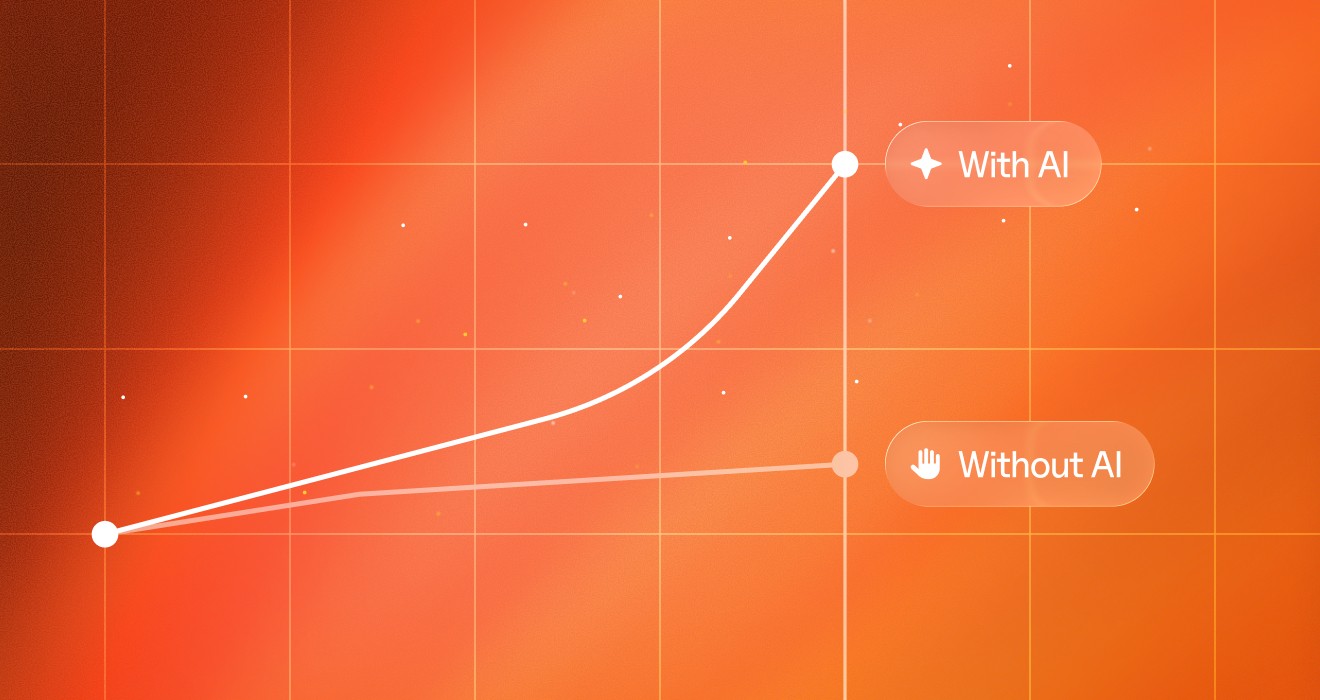
Lower-performing teams using AI improved delivery speed dramatically, reducing Lead Time to Value by nearly 50% compared to similar teams not using AI. By contrast, top-performing teams saw improvements of around 10–15%.
That’s roughly a 4x difference in impact. This suggests that AI acts as a multiplier.
Teams with slower systems often see the biggest immediate improvements, because AI removes friction in the coding stage. But teams that are already operating efficiently have fewer obvious bottlenecks to remove.
Faster Coding Is Exposing New Bottlenecks
Another pattern emerging from the data is where work begins to stall once coding speeds up.
As developers generate more code, the pressure shifts downstream into review, testing, and integration.
Code review is becoming a particularly visible constraint. Bottom-quartile AI teams now take more than 35 hours on average to merge pull requests, while top-performing teams complete merges in under 21 hours.
This gap highlights how strongly review and integration capacity now influence delivery speed.
When development accelerates but review workflows remain unchanged, code simply queues up waiting to be merged.
The result is that coding gets faster, but delivery timelines barely move. The constraint hasn’t disappeared- it has moved.
Performance Gaps Still Remain Large
Even in the age of AI-assisted development, the gap between high- and low-performing engineering teams remains significant.
Top-performing teams ship changes to production in under 22.5 days on average, while bottom-quartile teams take more than 62 days. That’s nearly a 3x difference in delivery speed.
Predictability also varies dramatically.
High-performing teams complete more than two-thirds of the work they plan in each sprint, while lower-performing teams complete less than half, regularly missing their delivery targets.
These differences aren’t explained by tooling alone. Instead, they reflect how effectively work flows through the delivery system- from planning and refinement through coding, review, and release.
The data shows this clearly in how teams spend their engineering capacity.
High-performing teams dedicate over 41% of their time to roadmap delivery, while lower-performing teams spend less than 21%, with the rest consumed by bugs, incidents, and unplanned work.
AI Doesn’t Fix Delivery Systems
One of the strongest conclusions from this year’s benchmarks is that AI accelerates development, but it does not automatically fix the underlying delivery system.
Teams that struggle with slow reviews, unstable planning, or frequent rework do not suddenly become high-performing just because developers write code faster.
Instead, AI tends to expose these issues more clearly.
When coding accelerates, weaknesses in planning, review capacity, and integration processes become harder to ignore.
The benchmarks show that teams which actively remove these constraints deliver more than twice the output per engineer compared to those that simply adopt AI tools without improving the system around them.
In other words, AI increases potential- but realizing that potential requires system-level change.
Why AI Adoption Needs a Framework
One lesson from this year’s benchmarks is that AI adoption works best when it’s guided, not improvised.
Many teams introduce AI tools informally. Developers begin using them individually, coding speeds increase, and leadership expects delivery performance to improve automatically. But without a structured approach, the benefits often stall.
Coding accelerates, while the rest of the system- planning, reviews, testing, and release processes- continues operating the same way. The result is exactly what the benchmarks highlight: bottlenecks shift, but overall delivery outcomes barely change.
That’s why many engineering organizations are adopting frameworks to guide their transition to AI-augmented engineering.
At Plandek, we developed the RACER framework to help teams approach this transition systematically. RACER focuses on five areas that determine whether AI improves delivery outcomes:
R – Roadmap focus: ensuring engineering capacity is spent on value-creating work
A – Alignment: connecting delivery metrics to business outcomes
C – Constraints: identifying and removing bottlenecks in the delivery system
E – Evidence: measuring the real impact of AI on delivery performance
R – Responsiveness: adapting workflows as AI changes how teams build software
The goal is not simply to adopt AI tools, but to evolve the engineering system around them.
Teams that treat AI as part of a broader delivery transformation tend to see the biggest gains- because they improve how work flows through planning, development, review, and release together.
What Engineering Leaders Should Take Away
The data points to a simple but important lesson.
AI is changing software development, but the fundamentals of delivery performance still matter.
Engineering organizations that want to benefit from AI need to think beyond coding productivity alone. The biggest gains come from improving how work flows across the entire delivery pipeline:
Planning and refinement
Code review and collaboration
Testing and integration
Deployment and release processes
When these stages evolve alongside AI adoption, delivery speed and predictability improve together.
When they don’t, the bottleneck simply moves.
Explore the Full Benchmarks
The 2026 Engineering Productivity Benchmarks explore these patterns in greater depth, including:
How AI adoption is affecting delivery speed
Where engineering bottlenecks are shifting
The metrics that separate top-performing teams from the rest
What engineering leaders can do to improve delivery outcomes
If you want to understand how your organization compares- and where the biggest opportunities for improvement lie- the full report is now available.



See how your engineering efforts translate into measurable business impact
Measure delivery performance, AI impact, and engineering productivity with hundreds of metrics, OOTB dashboards and custom configurations.









NEW
Contact us
UK Office
Unit 313 The Print Rooms, 164-180
Union St, London SE1 0LH
US Office
Floor 4, 1515 Mockingbird Ln,
Charlotte, NC 28209, USA